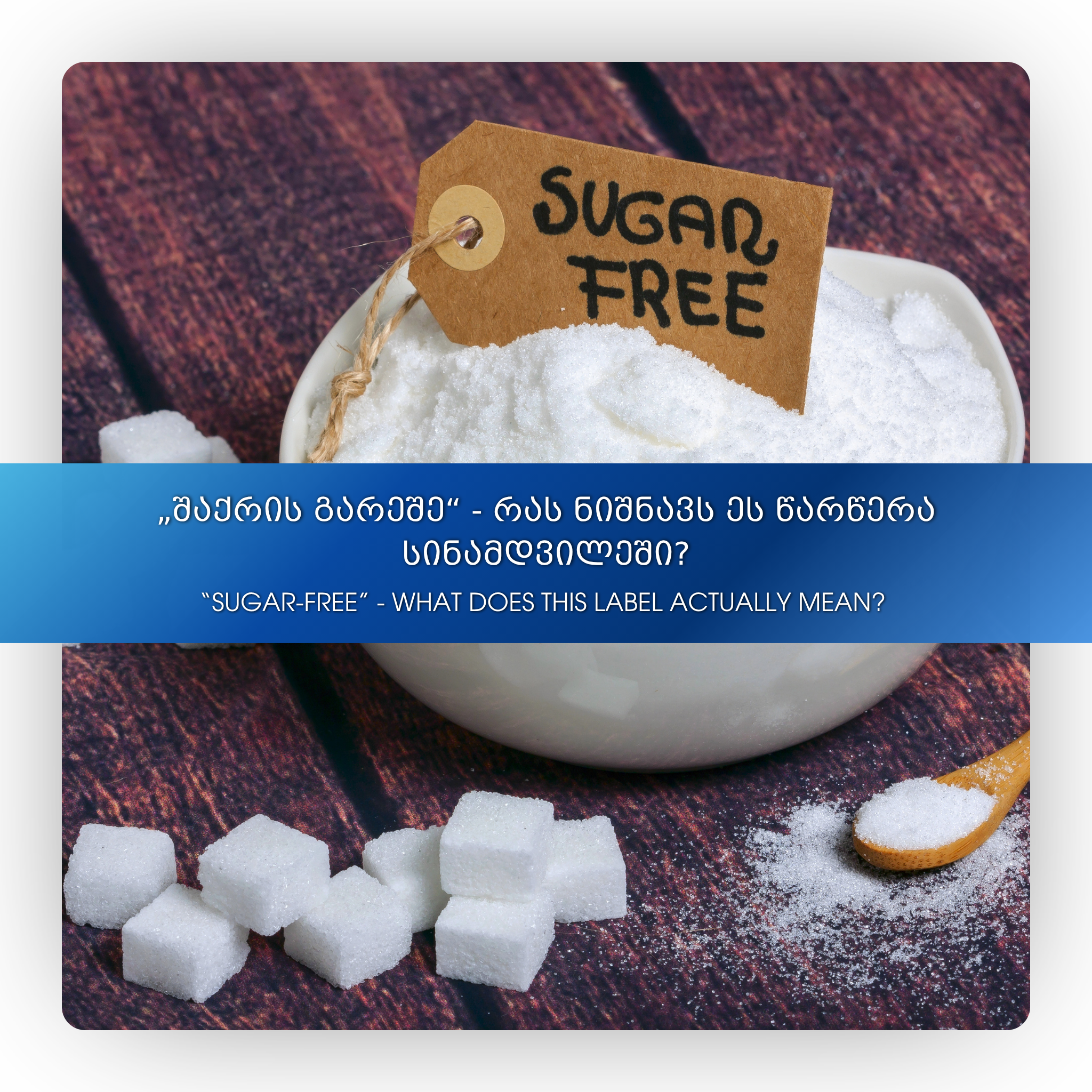
Imagine two nearly identical jars sitting next to each other on a supermarket shelf. One has the word “Natural” printed prominently across the label; the other does not. The first costs considerably more.
The obvious question is: what exactly is the consumer paying extra for - the product, or the word on the label?
Unlike many marketing claims, terms such as “organic,” “bio,” and “eco” are legally regulated.
In the European Union, Regulation (EU) 2018/848, which has applied since 1 January 2022, sets out the rules governing organic production and labelling. A processed food product may generally be labelled as organic only where at least 95% by weight of its agricultural ingredients are organic. The use of genetically modified organisms (GMOs) is also prohibited in organic production.
Georgia follows a similar regulatory approach.
Under Georgia’s Food/Feed Safety, Veterinary and Plant Protection Code and the Government Resolution on Organic Production, terms such as “biological,” “ecological,” “eco,” “bio,” and “organic” - including combinations or derivatives of these terms - may not be used in product labelling unless the relevant organic production requirements have been met and the product has been appropriately certified.
Organic certification is voluntary in the sense that producers are not required to market their products as organic. However, once a producer chooses to use an organic claim on the label, compliance with the applicable certification and production requirements becomes mandatory.
There is one important distinction to keep in mind:
“Organic” describes how a product was produced. It does not automatically tell you whether the product tastes better, contains fewer calories, or is healthier overall.
The word “natural” is a different matter.
In the United States, for example, the Food and Drug Administration (FDA) has not established a formal statutory or regulatory definition of the term “natural” for general food labelling purposes.
Instead, the FDA has historically followed a policy under which “natural” generally means that nothing artificial or synthetic - including certain colour additives - has been added to a food that would not normally be expected to be present in it.
Importantly, however, the FDA itself notes that this approach does not address how food is produced. It does not, for example, determine whether pesticides may have been used, nor does it establish specific requirements regarding farming or processing methods.
In practical terms, the word “natural” may therefore tell consumers far less about a product than they assume.
This is where the issue becomes more complicated.
Scientific research has identified certain differences between organic and conventionally produced food, but the evidence does not support a simple conclusion that “organic” automatically means “healthier.”
A 2012 systematic review conducted by researchers at Stanford University found little evidence of clinically significant nutritional differences between organic and conventional foods.
However, the review did find that organic produce was less likely to contain detectable pesticide residues and that organic meat products were associated with a lower risk of contamination by certain antibiotic-resistant bacteria.
A major 2014 meta-analysis published in the British Journal of Nutrition, which examined 343 peer-reviewed studies, reported higher concentrations of certain antioxidants in organic crops.
The researchers also found a substantially lower incidence of pesticide residues and lower concentrations of cadmium in organic crops.
These findings are significant, but they do not by themselves prove that eating organic food leads to better long-term health outcomes.
A 2018 French study based on approximately 69,000 participants in the NutriNet-Santé cohort found an association between higher organic food consumption and a lower incidence of certain cancers.
But there is an important limitation: this was an observational study.
People who regularly consume organic food may differ from other consumers in many ways. They may eat more fruit and vegetables, exercise more, smoke less, or have different socioeconomic circumstances.
For this reason, an association between organic food consumption and lower disease risk does not necessarily mean that organic food itself caused the reduction in risk.
The study’s authors also emphasised that further research was necessary before drawing conclusions about causality.
This is one of the most common misconceptions about organic food.
Organic agriculture does not mean agriculture without pesticides.
Certain pesticides and plant-protection products are permitted in organic farming, including substances of natural origin.
Examples may include compounds such as copper-based products, pyrethrins and spinosad, subject to the applicable regulatory rules.
And “natural” does not automatically mean harmless.
Copper, for example, can accumulate in soil and, at sufficient concentrations, may have adverse effects on aquatic organisms and the wider environment.
The key distinction is therefore not simply between “pesticides” and “no pesticides,” but between the substances and methods permitted under different production systems.
Why are words such as “natural” and “organic” so persuasive?
Part of the answer lies in what researchers sometimes describe as a naturalness bias - a tendency to prefer things perceived as natural, even when the preference cannot be fully explained by measurable differences in safety or quality.
Our preference for natural products may be influenced not only by health considerations, but also by aesthetic and even moral perceptions.
Yet nature itself provides countless reminders that natural does not necessarily mean safe.
Aflatoxins, solanine and toxins found in poisonous mushrooms, for example, are all naturally occurring substances.
Labels can also influence the way we perceive the nutritional qualities of food.
Experiments have shown that when identical foods are presented with different labels, consumers may perceive the product labelled “organic” as lower in calories, healthier or more acceptable to consume in larger quantities.
This phenomenon is sometimes described as a health halo effect: one positive attribute on a label influences how consumers judge the product as a whole.
In some circumstances, such labelling may even encourage consumers to pay less attention to the product’s actual nutritional profile.
Organic agriculture can offer environmental benefits, but the answer again depends on how the impact is measured.
When measured per hectare of farmland, organic agriculture is often associated with benefits such as:
greater biodiversity;
improved soil quality;
reduced use of synthetic pesticides and fertilisers; and
lower levels of nitrate pollution in certain circumstances.
However, organic farming also generally produces lower yields than conventional agriculture.
Research has commonly estimated an average yield gap of around 19-25%, although the difference varies considerably depending on the crop, region and farming practices involved.
Lower yields mean that producing the same quantity of food may require more agricultural land.
As a result, when environmental impact is assessed per kilogram of food produced rather than per hectare, some of the environmental advantages of organic farming may become smaller - and in certain categories may disappear altogether.
So the environmental comparison is not as simple as saying that organic farming is always better or always worse.
The answer depends on what is being measured.
The most useful approach is to focus on information that can be verified.
Look for certification, not just adjectives.
A genuinely certified organic product should carry the relevant certification or control-body information required under the applicable system.
Be cautious with broad marketing terms.
Expressions such as “natural,” “farm-made,” or similar environmentally themed claims do not necessarily carry the same legal meaning as a certified organic claim.
Read the ingredient list and nutrition declaration.
The amount of sugar, salt, saturated fat and other ingredients will often tell you more about the nutritional qualities of a product than a large marketing claim on the front of the package.
Ultimately, “organic” is primarily a statement about a production system - not a guarantee that a product is healthier, safer, tastier or nutritionally superior in every respect.
And the word “natural”, despite its powerful appeal to consumers, may sometimes be little more than that: a word.
Regulation (EU) 2018/848 on organic production and labelling of organic products. EUR-Lex.
Law of Georgia on the Food/Feed Safety, Veterinary and Plant Protection Code. Legislative Herald of Georgia (Matsne).
Resolution of the Government of Georgia on Organic Production. Legislative Herald of Georgia (Matsne).
U.S. Food and Drug Administration. Use of the Term “Natural” on Food Labeling.
Smith-Spangler, C. et al. (2012). Are Organic Foods Safer or Healthier Than Conventional Alternatives? A Systematic Review. Annals of Internal Medicine, 157(5), 348–366.
Barański, M. et al. (2014). Higher Antioxidant and Lower Cadmium Concentrations and Lower Incidence of Pesticide Residues in Organically Grown Crops: A Systematic Literature Review and Meta-Analyses. British Journal of Nutrition.
Baudry, J. et al. (2018). Association of Frequency of Organic Food Consumption With Cancer Risk. JAMA Internal Medicine.